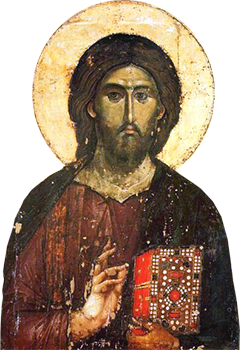
The central worship service of the Orthodox Church, celebrating the Eucharist (Holy Communion). Usually celebrated on Sundays and feast days, the Divine Liturgy consists of the Liturgy of the Word (scripture readings) and Liturgy of the Faithful (Eucharistic prayer and communion). The most common forms are the Liturgies of St. John Chrysostom and St. Basil the Great.
Theophany (Epiphany)
The manifestation of Christ as God through His baptism in the Jordan River by St. John the Baptist. During this feast, water is blessed in a special service, and many parishes perform the Great Blessing of Waters. The feast celebrates the revelation of the Trinity and Christ's divine nature.
Synaxis of John the Baptist
The gathering to honor St. John the Baptist on January 7th, the day after Theophany. This synaxis celebrates John's role as the Forerunner who baptized Christ and his witness to Christ as "the Lamb of God." The feast connects John's ministry to the Theophany celebration, emphasizing his preparation for Christ's revelation.
St. Theophan the Recluse
The 19th-century bishop and spiritual writer who translated patristic texts and guided many souls. Celebrated on January 10th, Theophan became a hermit after serving as bishop and devoted himself to prayer and writing. His letters on spiritual life and translations of the Philokalia made patristic wisdom accessible to laypeople. He represents scholarly monasticism and spiritual direction.
St. Sava of Serbia
The 13th-century prince-monk who became the first Archbishop of Serbia and organized the Serbian Orthodox Church. Celebrated on January 27th, Sava established monasteries, schools, and hospitals throughout Serbia. He obtained autocephaly for the Serbian Church from Constantinople and wrote the first Serbian constitution. He represents national and ecclesiastical independence through Orthodox faith.